Core design
- Electronic schematic design
- PCB design and layout
- Electronic circuit simulation
- Mechanical design
- AI observation-pipeline development

ARGUS / DEVELOPMENT CONCEPT
A visual observation concept for complex low-altitude environments.
ARGUS / PRODUCT PRESENTATION
ARGUS is an AI-assisted electro-optical observation concept for building early awareness of small unmanned aircraft in complex, low-altitude environments.
Understand the mission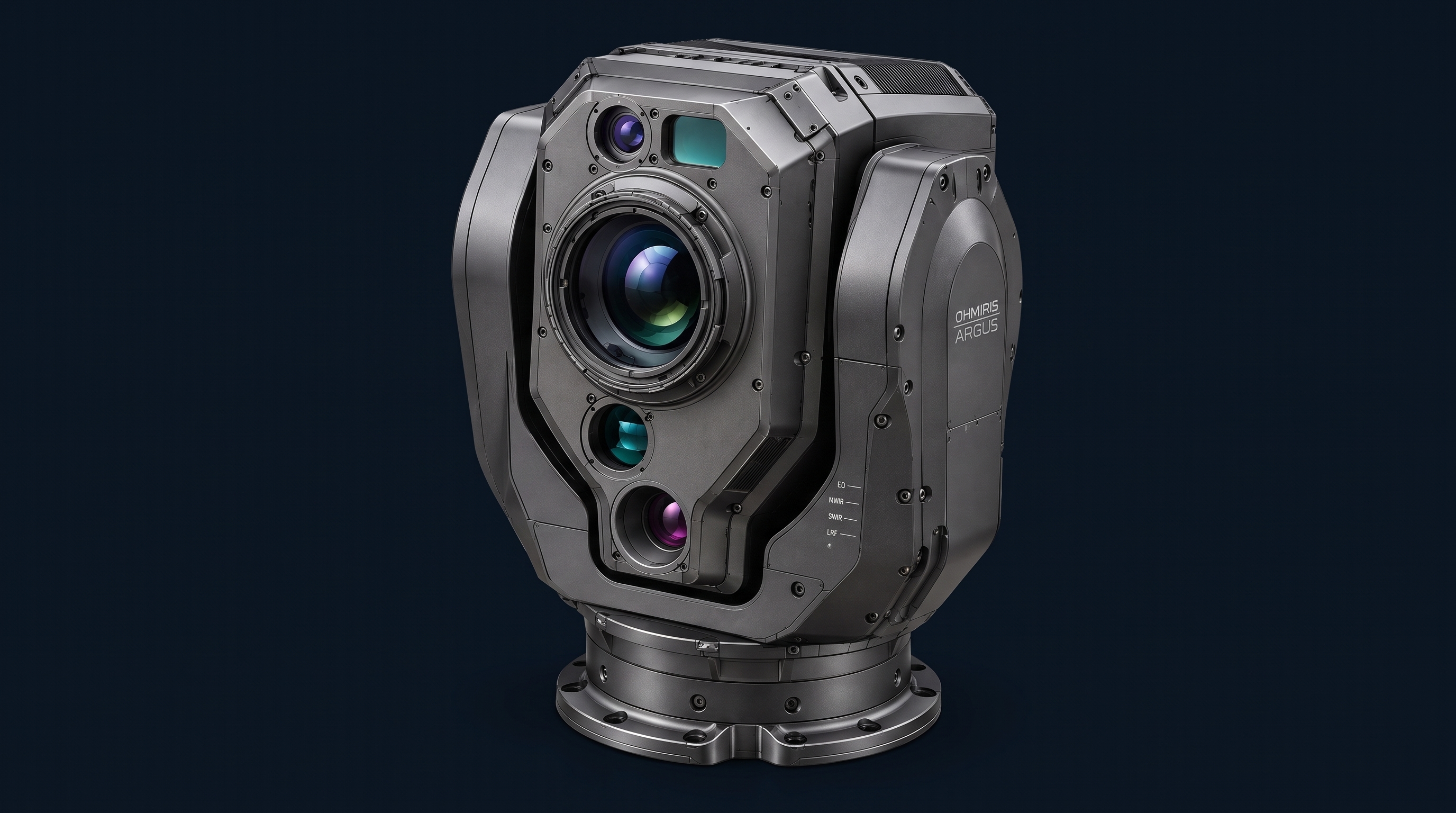 OHMIRIS / ARGUS
ARGUS / DEVELOPMENT STATUS
ARGUS is in the engineering design phase. This status distinguishes completed design work, active validation and the next integration gates.
Transparency note: ARGUS is a development concept and is not presented as a field-validated production system.
01 / WHY NOW
The need to see early has not. Small unmanned aircraft are accessible, fielded at scale and can create disproportionate pressure on assets, infrastructure and the people responsible for protecting them. The question is no longer whether a low-altitude object matters, but how quickly its context can be established.
UKRAINE / MASS & ADAPTATION
Public analysis of the war in Ukraine documents how large numbers of low-cost drones can place sustained pressure on air-defence resources, logistics and operator attention. For observation, the lesson is clear: visual context at low altitude must be available early, repeatably and in a usable form.
Read the public analysisREGIONAL ESCALATION / DENSE AIRSPACE
Regional escalation involving Iran, Israel and the United States has put drone and missile threats in dense, layered air-defence environments into sharper focus. The enduring requirement is to connect sensing, scene context and authorised decisions, rather than treat any single sensor as a complete answer.
Read the public analysisOHMIRIS / THE ENGINEERING QUESTION
ARGUS began with an engineering question: when mass-producible small aircraft compress the time from a first visual cue to operational relevance, how can the operator receive the right scene context before information is lost? ARGUS is not positioned as a standalone answer. It is being developed as an electro-optical observation layer that can complement a wider, authorised architecture.
01 / THE OBSERVATION GAP
Low-cost, one-way unmanned aircraft can create disproportionate risk for high-value assets and critical infrastructure. Their size, low-altitude profiles, movement and changing backgrounds can make observation difficult for any single sensing layer.
Useful image detail must be recovered from a limited target signature.
Sky, terrain, infrastructure and weather change the visual scene continuously.
Information must arrive with context that supports a timely human decision.
02 / INFORMATION FLOW
ARGUS is designed as a supporting observation layer. It connects electro-optical sensing with a purpose-trained situational-awareness model and an operator-facing presentation, then provides assessed context to authorised response and command interfaces.
ARGUS supports detection, assessment and hand-off. Response decisions remain with the authorised operator and connected systems.
03 / EVOLUTION PATH
The long-term ARGUS direction is not more sensors for their own sake. It is a disciplined fusion architecture: each sensing layer contributes a distinct piece of context, while the operator retains authority over assessment and response.
Development themes, not current product specificationsFOUNDATION
Visible and other optical observation channels provide the visual track, scene context and human-verifiable evidence at the centre of the ARGUS concept.
FUTURE SENSING LAYER
Research into rotor and propulsion sound patterns may add environmental cues where acoustic conditions permit. Acoustic information is intended as a supporting signal, not a standalone identification claim.
FUTURE SENSING LAYER
Where lawful and authorised, passive monitoring of the surrounding radio environment may provide time and direction cues for fusion with visual observation. The objective is situational context, not interception of communications content.
FUSION LAYER
A purpose-trained situational-awareness layer can correlate time, direction, scene and sensor confidence into one operator-readable picture, with traceability and human authorisation built into the workflow.
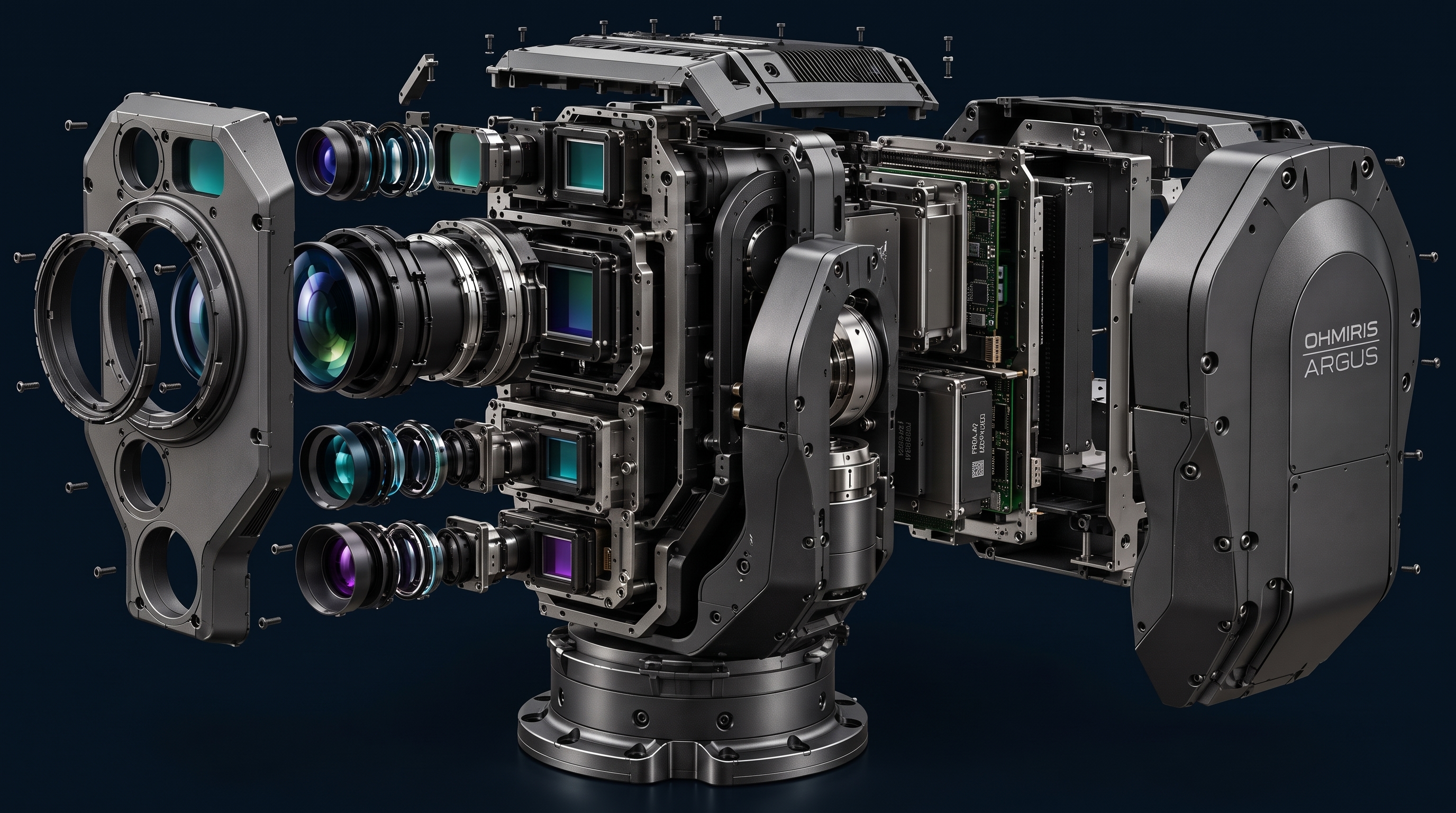
CONCEPTUAL ARCHITECTURE
Illustrative architecture for technical communication. Component placement and interfaces remain subject to programme validation.
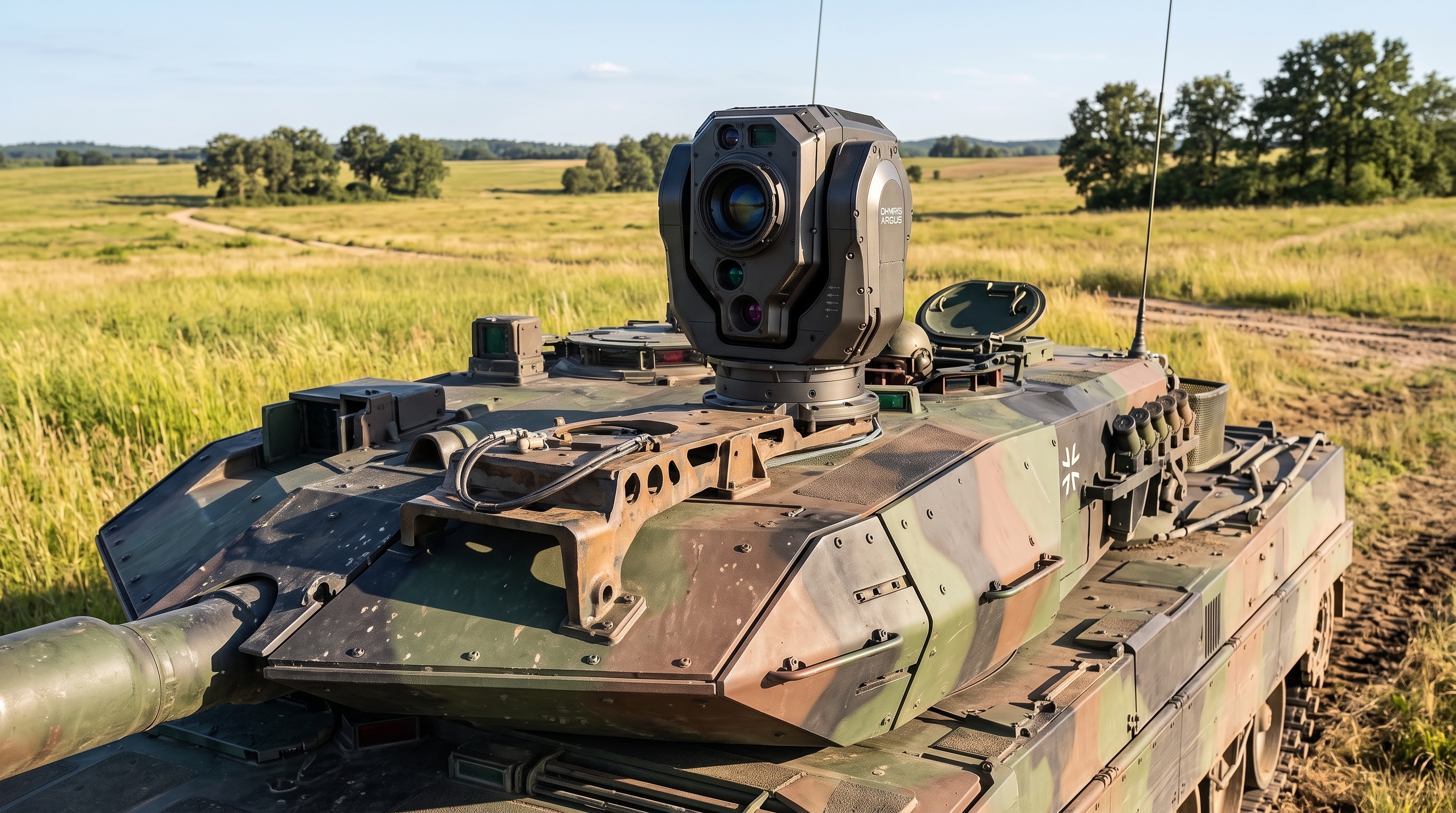
INTEGRATION / ILLUSTRATIVE CONCEPT
ARGUS is intended to contribute a clear visual track and assessed location context to the wider counter-UAS architecture. It does not replace radar, command-and-control or response systems; it adds an electro-optical layer where visual confirmation matters.
ARGUS is being developed to help operators establish, assess and maintain a visual track of small unmanned aircraft where apparent size, motion and background complicate observation.
Optical observation adds a complementary source of scene information where detectability varies with environment and geometry.
Visual context helps an operator distinguish motion, object characteristics and the surrounding scene.
Stabilised observation and considered workflow design support persistent assessment over time.
ENGINEERING NOTE
Small unmanned aircraft can present a difficult observation task: apparent size is limited, backgrounds are complex and conditions change rapidly. ARGUS is a development programme focused on combining optical observation, stabilised control and clear operator presentation into one coherent system concept.
A practical framework
Whether an object is visually separable depends on background, illumination, spectral response and atmospheric transmission.
A target must occupy useful image detail; field of view, focal length and pixel pitch are considered together.
The intended outcome is an assessable observation with explicit system context, not an unsupported automated conclusion.
OHMIRIS / ELECTRO-OPTICAL SYSTEMS ENGINEERING